Categories
Events

Workshop: Museums Futures in a Time of Austerity

Birkbeck Cinema, 43 Gordon Square, Bloomsbury
2-4.30pm, 24th February 2018

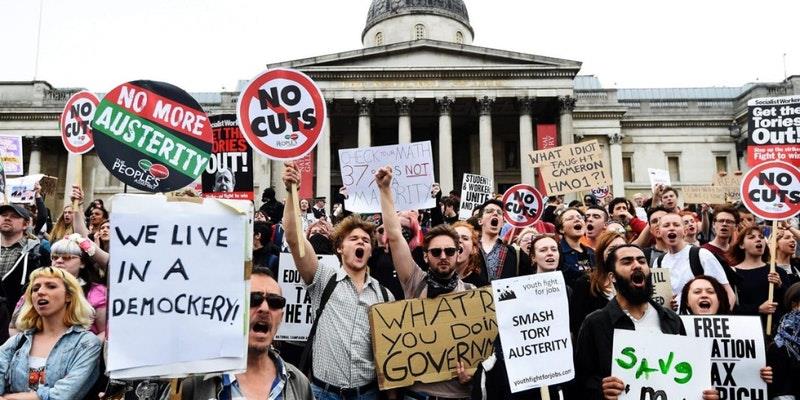
Museum closures are a matter for concern. The austerity measures introduced under the current government have resulted in local authorities reducing funding for museums and some have been forced to close. In this workshop we examine the landscape of closure within the UK. How do rates of closure compare with previous decades and also with rates of new museums opening? What’s lost when a museum closes? And is closure always a problem? Is it really necessary to have so many museums keeping their collections for posterity?

Chair: Professor Fiona Candlin, Director Mapping Museums research team, Birkbeck

Speakers:

Dr Jamie Larkin, Mapping Museums research team, Birkbeck
Alistair Brown, Policy officer, Museums Association
Emma Chaplin, Museums consultant
Jon Finch, Re-Imagining The Harris – Project Leader

Please register in advance

Abstracts

Museum closure is often an emotive subject. While the sector can point to recent closures and their causes, there is little understanding of how such trends play out over the longer term. This talk will present preliminary findings of the Mapping Museums project concerning museum closure between 1960-2018. It reflects on the methods used to trace information on closed museums and the conceptual problems encountered during the data collection. The talk then examines long-term closure trends through a number of key characteristics (e.g. location; subject matter; governance) and considers the implications that these findings may have for the sector at large.
Dr Jamie Larkin

The Museums Association has been monitoring museum closures over the last decade. How do we define closure? How have trends around closure changed? What has the impact of austerity been? And does the issue of closure obscure other major trends in the sector at present? Alistair will examine how closure figures have been gathered, interpreted and used as an advocacy tool on behalf of the museums sector.
Alistair Brown

During 2016 Emma and her colleague, Heather Lomas, carried out research for Arts Council England and the Museums Association about how museums deal with the reality of closing a museum. She will explore what happens when closure decisions are made, the challenges that are presented and the implications this has for governing bodies, staff, volunteers, the sector and the communities that museums have served.
Emma Chaplin

Local government has been and remains the largest investor in local government across the UK. However the ongoing fall out from the financial crash of 2008, and the austerity measure put in place by national government, has led to a massive decline in the funds available to Councils.  This has led to authorities to reviewing and drastically reducing their investment in a range of services, including museums.  Therefore there has been a significant reduction of museum services in many places, and in some instances closure.  However in certain localities local authority supported museums are thriving, sometimes with increased investment.  Why do some Councils value their museums so highly, when others seem so ready to do without theirs?  Jon will use his extensive experience of working with museums across the country to explore the reasons behind Councils’ decisions to close museums.  He will use the recent closure of five museums by Lancashire County Council as a case study to consider the impact of such decisions and how local authorities might be helped to make informed decisions in the future.
Jon Finch

Categories
Events

AIM! I’m going to map forever…

Last week the Mapping Museums team attended the Association of Independent Museums (AIM) annual conference hosted at Chatham Historic Dockyard. This year marks the 40th anniversary of the foundation of AIM, which itself gives a good indication as to the moment when the growth of independent museums began to gather pace. As our project is working to map historical trends within the independent museums sector, the conference gave us the perfect opportunity to talk to colleagues with a long and deep involvement with independent museums and to meet those who had recently joined the organisation.

More specifically, we attended the conference for two reasons. The first was to create greater awareness of our project, which we hoped would help forge connections among both professionals and those responsible for running individual sites. The second was more prosaic; we aimed to actively gather data from delegates over the course of the two-day event and put more museums on the map!

Publicising the project

The main method of communicating Mapping Museums was a lecture as part of a session on partnerships between universities and museums. The project’s Principal Investigator, Professor Fiona Candlin, provided an overview of our project, emphasising that the museums sector currently lacks comprehensive data, and that our research would chart the growth of independent museums in relation to a host of cultural, political and economic factors.

Professor Fiona Candlin addressing attendees of the AIM conference


The lecture was well attended and this exposure led to both  conversations with sector staff who approached the project team later in the day and a significant increase in activity on our Twitter feed (@museumsmapping). These interactions were helpful for a few reasons. On the one hand we were able to discuss forms of practical help for the project and establish new contacts. But for the most part it was reassuring to exchange stories about the difficulties we face with issues like defining museums and knowing that these are shared problems (and frustrations!) across the sector.

It was also useful to talk to subject specialists about issues particular to their museums. Chatting to a delegate responsible for historic windmills about whether they should be counted as museums, she offered her insight that they should so long as their primary operating revenue came from visitors, rather than auxiliary uses such as producing artisanal flour. Meanwhile, delegates from a historic ship talked to us about whether it should be referred to as a museum or as a visitor attraction, and the difficulties of mapping some vessels that could be moored in different locations.

A highlight of the conference was the opportunity to meet Rob Shorland-Ball, a long-time AIM member and museum consultant who was responsible for depositing the AIM archive at the University of Leicester. By doing so he has been instrumental in helping us to record around 200 (often closed) museums that we have found looking through this material, and which we may not have located otherwise. It was great to inform him about the project and thank him for his efforts. Such interactions, particularly with historical data collection, have helped to humanise the research.


Delegates helping with the data collection

In terms of the practical matter of collecting data at the conference, we did this by manning a stall in the exhibition hall. Here delegates could come and talk to the project team, check to see if their museum was in our database and add (or amend) their entry if not. In particular we were eager for delegates to tell us if museums were open or closed, and to give us an idea of their subject matter. The benefit of this was that experts – people ‘on the ground’ working at these museums– could corroborate, and add to, our data.

To make the process as easy as possible we created A3 paper catalogues of our database with entries listed in alphabetical order. This meant that delegates could easily browse entries and had enough space to make additions We also had our computer database on hand in case of any problems in finding museums (for example, if the Barnstaple Museum was recorded as the Museum of Barnstaple).

AIM delegates helping with our data collection


In addition to this, we also had on show a prototype of our computer mapping model, demonstrated by Nick Larsson, the project’s computer science researcher. The benefit of bringing the model (and we needed to a substantially reconfigure a laptop to do so!) was that visitors could experience the whole of the research process; once they had checked their entry they were able to see how the data would be visualised and its functionality, and thus think about how they could use such a resource once it is finalised.

The vast majority of the delegates that we spoke to were very enthusiastic about the project and some returned to the stall with their friends to encourage them to participate. As a result, delegates made additions to data over 60 entries and offered suggestions of museums were hadn’t heard of. As a result, we are now aware of the John Lewis Heritage Centre, the Christchurch Tricycle Museum (1984-1999), and the Wigston Folk Museum (1981-1990)! We were also given names of regional experts and offers of help to map museums at a local level. Indeed, despite the cutting-edge technological aspect of the project, our ability to collect (often obscure) information is still largely reliant on traditional forms of networked knowledge; an old fashioned form of crowdsourcing.

New data!


Overall, the conference was a success on a number of fronts. Our project is much more visible as a result and we have a trove of data and helpful regional contacts. Beyond these tangible outcomes, the most encouraging aspect of the exercise was to be realise that we are working as part of a sector of professionals who have a great deal of enthusiasm for a project detailing museum history, and who are willing to do as much as they can to help add to this knowledge.


© Jamie Larkin          June 2017