Categories
Events

Museums and the Promise of Permanence

Thursday 14th May 2026, 4pm, The Conservatory, Birkbeck, Malet Street, London

The International Council for Museums defines museums as ‘permanent institutions’, as does the UK Museums Association. This seminar critically addresses the aspiration to permanence, its value, and its limits. We ask what would museums be if not permanent?

Speakers:

Bruno Brulon Soares ‘Permanence and Precarity’

Fiona Candlin ‘At Stake in Permanence’

Chair: Bethany Rex

Tickets are free but please a book a place

Bethany Rex, Research Fellow, Centre for Cultural & Media Policy Studies, University of Warwick. Following doctoral work on local government and museum asset transfer, Bethany has researched museum closures, decision-making in local government and how the commercialisation of museums is being experienced by museum staff. She is currently working on a book about museum closures (MUP, 2028).

Bruno Brulon Soares, Reader in Museum and Heritage Studies in the School of Art History, University of St Andrews. Between 2020 and 2022, Bruno was co-Chair of the Standing Committee for the Museum Definition (ICOM Define) and coordinated the global participatory project that led to the approval of a new museum definition adopted by the International Council of Museums in August 2022. He is the author of The Anticolonial Museum (Routledge 2024) and co-author of The Museum Definition Handbook (ICOM, 2025) with Lauran Bonilla-Merchav.

Fiona Candlin, Professor of Museology. School of Historical Studies, Birkbeck, University of London. Fiona is Director of the Mapping Museums Lab, a multi-disciplinary research group that has documented and analysed the history and development of the UK museum sector since 1960. Their most recent project addresses closure. She is author of Art, Museums and Touch (MUP 2009); Micromuseology (Bloomsbury 2015); Stories from Small Museums (MUP 2022) and many articles, chapters, and reports. She has almost finished a new book provisionally called Closed Museums and After.

Categories
Lab News

Major Changes to the Mapping Museums Lab Database

We’re delighted to announce that key functions from the original Mapping Museums Lab database have now been fully integrated into our new web application.

We are very grateful to Art Fund for helping fund additional development work, which has enabled us to extend and strengthen the Mapping Museums Lab resource for the benefit of the wider museums and heritage community.

This update brings together, in one place, the rich data from our first major project — a comprehensive database of all museums open in the UK from 1960 to the present — with our second major strand of research: detailed information on museums that have closed, including reasons for closure and the outcomes for their collections. For the first time, users can seamlessly explore all the Mapping Museums Lab data in one site.

Responding to input from our sector evaluation sessions, the addition to the web application offers a more flexible and intuitive user experience. You can now:

  • Search for individual museums using free text
  • View detailed information for each museum
  • Generate and search across lists of all museums in the database
  • We’ve also refreshed and expanded our accreditation data. Records have been updated and accreditation numbers added, making it easier to track institutional status and align our data with other resources and sector standards.

Whether you’re a researcher, policymaker, sector professional, or independent scholar, the new platform is designed to make the data more discoverable, usable, and interconnected than ever before. We look forward to seeing how you use it.

The original Mapping Museums database will no longer be updated.

Categories
Lab News Museum Closure in the UK Publications

New article on museum closure data

The Mapping Museums Lab has just published an article in the Journal of Open Humanities Data about our project on museum closure. If you are interested in finding out more about how we collected and managed the data, the article is open access and free for everyone to read: A Dataset of Collections Dispersal Following Museum Closures in the UK During 2000–2025.

Categories
Museum Closure in the UK Publications

Closed Museums and their Collections

The new Mapping Museums report is now out and available online.

After more than two years of concentrated work we have collected data on all the museums that closed in the UK after 2000, why they closed and what happens to their collections.

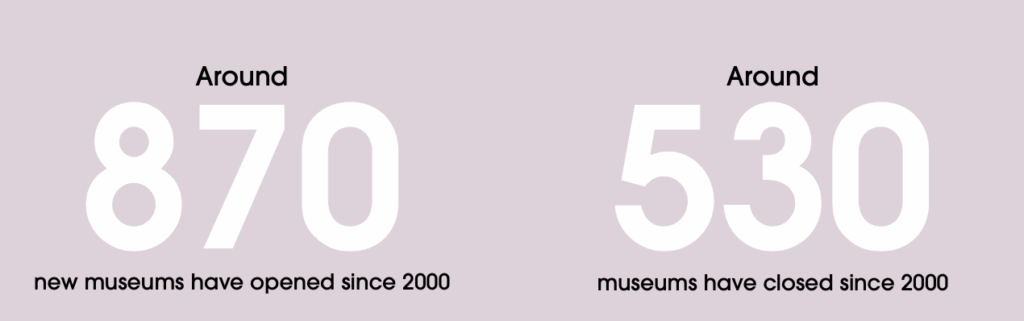
The headline findings are straightforward: the sector has expanded in size since 2000, and when museums did close, their collections were commonly transferred to other museums. That picture becomes rather more complex when we look at which museums closed and opened, and at all the other outcomes of collections disposal.

To find out more read the report (bit.ly/4iAnp7Z)

Or use our new web application: (mappingmuseums.shinyapps.io/mappingmuseums)

Categories
Lab News

The Mapping Museums Database: Bad and good news

Do you use the Mapping Museums database? If so, we need your input.

Bad News: The Mapping Museums Database is now almost six years old, which is elderly for prototype software. Redeveloping a database is expensive and our funding has come to an end. Thus, we have made the decision to archive the original Mapping Museums project website and database. It will still be available online, but the data will not be updated and the system will not be supported after December 2025.

Good News: We developed a new web application as part of our most recent research on museum closure and collections disposal. This application allows users to search and visualise the new data.

The new web application will also offer a slimmed down version of the Mapping Museums Database, and the information will continue to be updated.

We will not be able to transfer the complete the Mapping Museums Database to the new web app, so we need to know what functions are essential for you.

Please can you tell us how you use the Database?

For example:

Do you use Browse or Search to look for museums?

Do you use the quick search or the advanced search?

What information do you look for? museums’ postcodes? governance? size?

Do you use the information on social deprivation or the geo-demographic areas?

Do you ever look at notes?

Do you use the Visualise functions, if so, which ones?

What can you not easily do without?

Any information on how you use the Database and what you would like to retain will help us ensure continuity of service. We appreciate you taking the time to respond. Please send any feedback to mappingmuseums@bbk.ac.uk

Categories
Events

Museum Closure in the UK 2000–2025: an invitation

Monday 1 December, 6:00pm, Birkbeck, London WC1E

Chair: Isabel Wilson, Interim Director for Museums, Arts Council England
Speaker: Professor Fiona Candlin, Director of the Mapping Museums Lab, Birkbeck
Respondent: Lord Neil Mendoza, Chairman Historic England

Book your free place here (MuseumClosureUK.eventbrite.com)

Join the Mapping Museums Lab for the launch of new research exploring museum closure and collections disposal in the UK between 2000 and 2025. Professor Fiona Candlin will introduce a web application and the accompanying report, Collections from Closed Museums. There will be a response from Lord Mendoza, and discussion. The event will be followed by a drinks reception, and an opportunity for further discussion.

For information, contact mappingmuseums@bbk.ac.uk

Categories
Events

Museum Closure web application evaluation: an invitation

Can you help us to evaluate the new Mapping Museums Lab web application? Would you like a preview of the new Mapping Museums data on museums closure and collection disposal? Can you be in London on Monday 29th September 2025 from 2-4.30pm?

The Mapping Museums Lab is a multidisciplinary team based at Birkbeck, University of London and King’s College London. For our current project ‘Museum closure in the UK 2000-25’ we have collected data on which museums have closed, why, and what has happened to those collections. We’ve also developed software to help us analyse and visualise that information.

The evaluation session is an important means for us to gain feedback about the usefulness of the software. With your input we can further improve the system before it is made publicly available in November.

We’re particularly keen to have input from people working in museums, museum support organisations, and museum policy.

The trial session will be based on three activities:

A hands-on introduction to the web application.

Using the application to undertake a small number of information searches. This will allow us to gauge how easy the system is to use.

Group discussion about your experience of using the system and the ways that it could be improved and extended.

If you are able to join us for the afternoon or if you need any further information please contact Katy Pettit on k.pettit@bbk.ac.uk letting her know your job title / role and / or interest in the topic. We look forward to seeing you.

Categories
Museum Closure in the UK

Museum closures 2024–2025

Sixteen museums have closed since January 2024. In this blog we report on those closures and look at why they have happened.

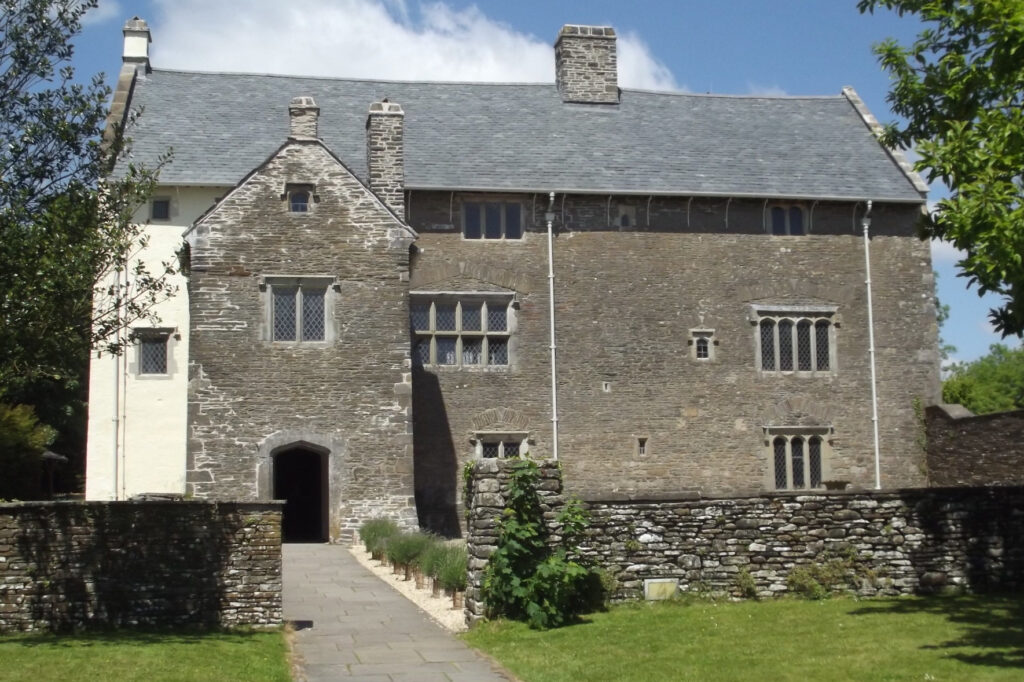
Some of the closures were due to local authority budget cuts. These affected Llancaiach Fawr Living History Museum in Treharris, as the council sought to save £45 million over the next two years. In Hampshire, Westbury Manor Museum was running at a deficit and seen as financially unviable by Hampshire Cultural Trust who were managing it. The Trust in turn had had its budget cut by £600,000, almost a quarter of the total, by Hampshire County Council.

Llaincaiach Fawr. Photo by Elliot Brown

A similar situation resulted in the closure of Bursledon Windmill, also run by Hampshire Cultural Trust. Eastleigh Borough Council had been contributing funding for the Windmill,  but they terminated the agreement with the Cultural Trust in February 2023.

In Scotland, Alyth Museum was closed after a package of cuts planned by its managing trust, Culture Perth & Kinross, as it reorganised its operations after a 12% cut in its council funding spread over three years.

Independent museums often receive external funding, and cuts resulted in the closure of the independent open-air museum at Auchindrain, the sole example of a Highland farm township. In this case, Historic Environment Scotland ended their funding after providing around 90% of the museum’s costs for three years. The trustees stated that the costs of running the venue, which had been offset by the HES funding, far outweighed the income that they were able to generate. Although the museum is now closed to visitors and, according to the trustees, ‘unlikely to reopen in its present form’, whether the museum will close permanently remains unclear.1

Other independent museums have faced difficulties with costs. Announcing the decision to close Wirksworth Heritage Centre in Derbyshire, its trustees cited ‘the current economic climate, increased running costs and poor trading conditions’. Meanwhile, for Durham Museum the condition of the building was the deciding factor. It needed expensive repairs, including a new roof. The prospect of these costs meant that the Bow Trust who ran the museum felt unable to continue. The Fairground Heritage Trust also found costs to be prohibitive and in late 2024 closed Dingles Fairground Museum in Devon.

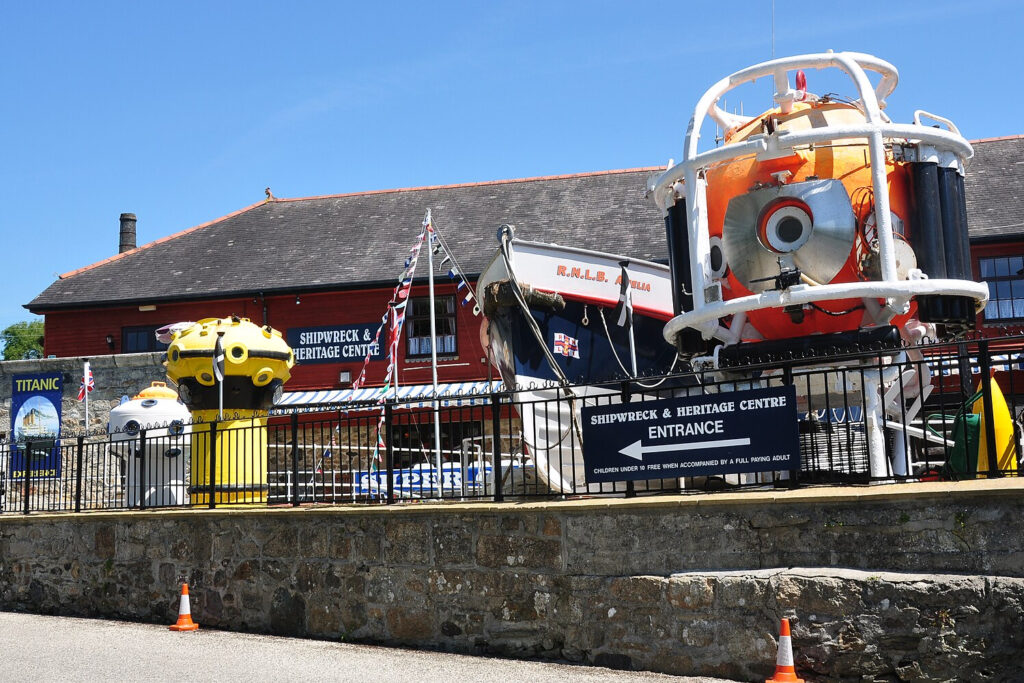
Charlestown Shipwreck & Heritage Centre. Photo by Nilfanion

A few private museums, all in Cornwall, also closed for financial reasons. The Flambards attraction in Helston stated that rising costs and a steady decline in visitor numbers had made the park’s operation and further investment unsustainable. The Cornish Heritage Museum was housed at the theme park Dairyland in Newquay, which had been running a deficit since the pandemic and decided to call it a day in 2024. The Charlestown Shipwreck & Heritage Centre, based not far away in St Austell, was one of Tim Smit’s businesses and Smit, the founder of the Eden Project, stated that he had decided to close the museum as part of a process of ‘consolidation’, saying that it raised insufficient revenue.

Other museums closed for reasons related to their premises. The independent Welsh Museum of Fire were concerned that their current premises, an industrial unit, were likely to be unsuitable for younger visitors and they are looking for alternative accommodation. The RAF Signals Museum closed in 2024 as RAF Henlow, where the museum was based, was to be closed down. Redevelopments at University College London in preparation for its bicentenary have prompted the relocation of the university’s art museum this year to smaller premises on the site. Although the museum’s new location will include storage and a study space, it will have no exhibition space. As one of our project’s criteria for a museum is that it should have some of its collection on display, we now consider this museum closed too.

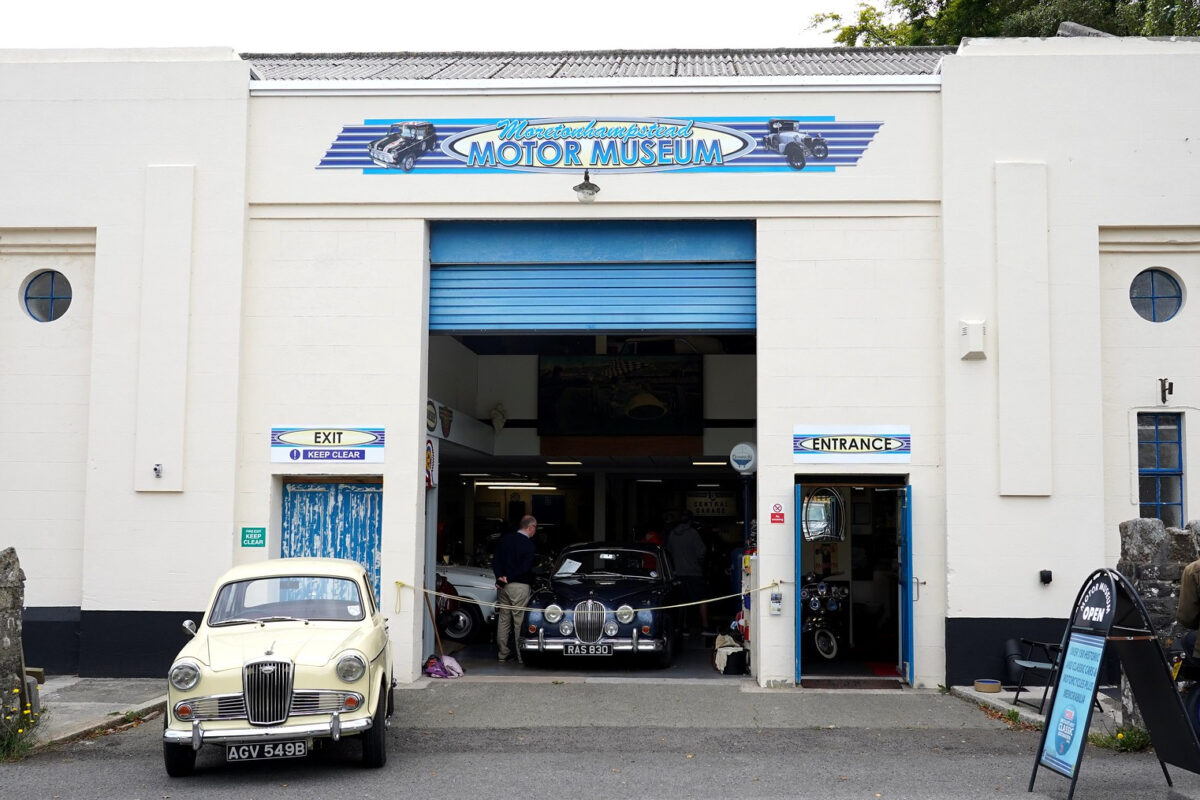
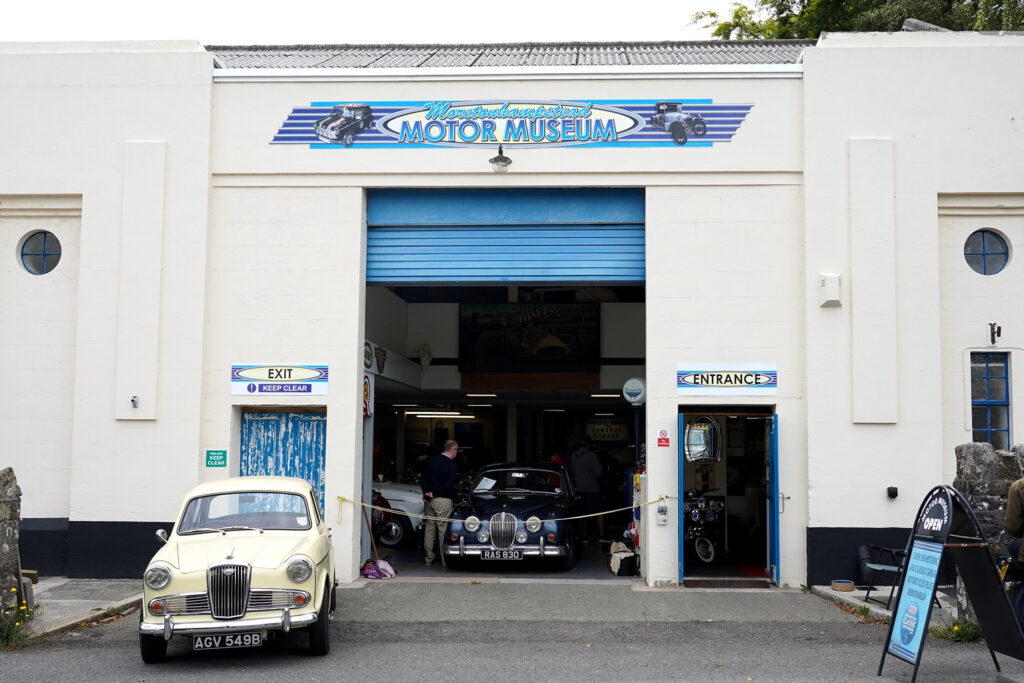
Moretonhampstead Motor Museum. Photo by Steve Knight

Lastly, we know from looking back at closures since 2000 that private museums commonly close because their owners wish to retire. This was the case at Marshland Maritime Museum near Kings Lynn, and the Moretonhampstead Motor Museum, both closed in 2024.

We’d like to thank staff at the various Museums Development Networks, Museums and Galleries Scotland, the Welsh Government, and the Northern Ireland Museums Council, all of whom have helped us to keep our data up to date.

We will continue to monitor closures for the remainder of 2025 so if you become aware of any museums closing, do let us know.

Mark Liebenrood

Images: Elliot Brown on Flickr; Nilfanion on Wikimedia; Steve Knight on Flickr; all Creative Commons.


  1. Since this blog was published, Auchindrain has announced that it will reopen on 20th July 2025 [updated 30 June 2025] ↩︎
Categories
Lab News

Mapping Museum Lab data incorporated into ONS dataset

Image: Office of National Statistics, 2025

Mapping Museum Lab Data Incorporated into ONS Dataset on UK Museums

We are pleased to announce that data from the Mapping Museum Lab has been incorporated into the latest report from the Office for National Statistics (ONS) on the number of museums across local authority districts in the United Kingdom. The dataset can be accessed here.

The Mapping Museum Lab is committed to advancing research on the distribution, development, and classification of museums in the UK, with a particular emphasis on smaller and independent institutions that are often underrepresented in official datasets. The inclusion of our data in this ONS report underscores the significance of our research in providing a more comprehensive and accurate picture of the UK’s museum sector.

The integration of our dataset enhances the ability of policymakers, cultural organisations, and researchers to analyse the geographic distribution of museums, contributing to broader discussions on accessibility, funding, and the role of museums in civic life. This collaboration highlights the importance of robust data collection in shaping cultural policy and ensuring informed decision-making.

We are encouraged by this recognition of our work and look forward to further opportunities to contribute to the study of the UK museum landscape.

Categories
Museum Closure in the UK

Is it closed?

Fig.1. The Barbara Cartland room in Collectors World, Downham Market, Norfolk.
Photo: Andi Sapey

Is it closed?

When is a museum closed? It seems like there would be a fairly obvious answer to this question, which would be a matter of public record and quite easy to track down. But working on this project, Museum Closure in the UK 2000–2025, we have not always found this to be the case.

Back in August 2024, Maria Golovteeva and I were drafted in to undertake research on a list of museums where information about their closure (or even if they had closed) had been especially hard to track down. Over the last seven months, we’ve used every research skill at our disposal to try and find out what happened to the museums on this list.

For some, like the Abriachan Museum (aka the Croft Museum) in the Scottish Highlands or the Baird Museum of TV (aka the Radio Rentals Museum) in Swindon, we discovered that the museum had closed prior to 2000 and so was outside of the scope of this project.

And for others, like the Brookeborough Vintage Cycles Museum in Northern Ireland or the Naseby Battle and Farm Museum in Northamptonshire, we finally tracked down information about the closure and the dispersal of those museums’ collections. Or, as with Collectors World in Norfolk (fig.1), we had to draw inferences about the reasons for closure from a range of sources.

But we also came across other museums that complicated our ideas around closure.

These are museums, like Haulfre Stables in Llangoed in Wales, where it is not at all clear whether the museum has closed or not. To some people I spoke to, Haulfre Stables was definitely still open because the collection is still in situ. But there are no public opening hours and it was not clear how someone would actually go about arranging to view the collection. So, in this case, we made the call that Haulfre Stables had in fact closed in 2012–13 when local authority funding cuts meant that responsibility was devolved to volunteers and the site could no longer open regularly. So, despite the collection still being in situ and potentially being open if someone really wanted to see it, we are labelling this as a closed museum.

Another example are penny arcade museums where the collection is owned by an individual who may move it to different locations. With one such museum, The Olde Tyme Penny Arcade or Museum of Amusements (fig.2) that had been based at Cheshire Workshops in the 2000s, the owner still retained his collection and it was now just based at other locations. So is this a closed museum, or is it just a relocation? As the newer sites had less of a public presence as a ‘museum’ and the collection was also more dispersed amongst different sites, we again made the call that this was a closed museum, although perhaps it could be argued that it isn’t closed at all.

Sometimes we found that sections of a museum closed but other parts remained, as with Fort Perch Rock Museum on the Wirral where the building had to close for some years because of a water problem. Because of this, part of the collection, the Marine Radio Museum, closed and was removed and dispersed to other museums and collections by the Marine Radio Museum Society, but other collections focused on warplane wrecks, a local submarine loss, and the Titanic remain and are intended to reopen soon. So rather than saying that Fort Perch Rock Museum is permanently closed, it might instead be more accurate to say that the Marine Radio Museum at Fort Perch Rock has closed.

At other times, the process of closure and collection removal appeared to be drawn out and exact dates were harder to pin down. With the Doughty Museum in Grimsby, which was later renamed the Welholme Galleries and then Welholme Galleries Community Museum, the public-facing aspect of the museum seemed to end around 2004, but a freedom of information response from the council stated that the building was used as a museum store until 2009.  

And then there has been the occasional museum on our list where we found that it never opened in the first place, as with Challenge at Aldershot (Military & Aerospace Museums), which was intended to open in 1995 on the army base at Aldershot but because of local authority cuts, amongst other reasons, never actually opened. So the museum can’t be said to have closed because it never actually opened.

These are just some examples of museums that have complicated our ideas around closure with it not always being as clear as one might expect about whether a museum is closed.

Helena Bonett

March 2025

Brightly coloured brochure owith vintage clown puppet, map, and images of people in the arcade
Fig 2, Museum of Amusements brochure, courtesy chestertourist.com